The Jean Tua Museum of the Automobile, Motorcycle and Cycle was opened in 1991 in Geneve (Switzerland) at Rue des bains 28-30 street of Plainpalais district by Professor Jean Tua, a man featuring a passionate penchant for classic cars and motorcycles.
It held very famous models of the first half of Twentieth Century Automobile History, including such representaive cars like a Hispano Suiza Alfonso XIII from 1910, a Hispano Suiza H6B from 1925, a Hispano-Suiza H6C from 1933, a 1935 Hispano-Suiza K-6 Type with a body made by Fernández and Darrin in Paris in 1936, a 1932 Bugatti Type 49 with a Ruckstuhl made body, an almost brand new Fiat Topolino, the only 1938 avantgarde convertible Citroen on earth with body made by the Swiss designer Bernath, a 1907 Renault, a 1904 De Dion Bouton Type W, a 1924 Hotchkiss Type AM, and many others, along with a comprehensive assortment of motorcycles belonging to legendary brands like Indian, Zundapp, Condor, BSA, Sunbeam, Motosacoche, BMW, Universal, Rudge and others.
It likewise contained a fairly wide and valuable range of all colour original vintage posters sporting a very good condition, and black and white photographs of the time - above all related to the figure of the genius Jean Birgkitt, creator of the mythical Hispano-Suiza engines- and diagrams of his excelent power plants, it all graphically displaying a golden period of the European and world motoring.
But after eleven years of existence of the Jean Tua Museum of the Automobile, Motorcycle and Cycle, which became the most important international benchmark in variety and quality of Hispano-Suizas, being highly successful and worldwide famous, with visitors arrived from every corner of the globe to watch this great automobile trove and cultural heritage, in December 2005, the old age of Professor Jean Tua, who was then 81 years old, and the lack of support and understanding of the political authorities of the city, made this generous man, whose top priority was the preservation of the highly valuable cars, motorcycles and cycles of his collection (which so much effort and thousands of hours of research and restoring he had devoted to during his whole lifetime) take the sad decision to close the Jean Tua Museum of the Automobile - that included nothing less than 140 original vehicles and was throughout fourteeen years one of the best in the world- , and put everything on sale through Osenal Paris Auction House, in an auction which took place at the very Jean Tua Museum of the Automobile on December 16, 2005.
Probably, the kind Professor Jean Tua, who loved his cars, motorcycles and cycles as sons, hadn´t any other choice, since his physical condition and stamina were dwindled due to his old age and he couldn´t keep on making the suitable maintaining and overhauling of the vehicles, not only because of the pricey investment it needed, but mainly because having these classic cars and motorcycles in perfect condition requires special liquids and a painstaking labour with the upholstery and many hours of devotion with artesan parameters.
That way ended, in a very sorrowful way, the existence of this wonderful museum, with the collection spread all over the world in hands of private owners, which prevented the many enthusiasts of the classic cars and motorcycles from the chance to know it for ever, its memory being also finally lost.
Or maybe not?


 Bugatti Type 49 from 1932. Eight cylinders and 3,300 c.c engine. 4 speed gearbox. Bore x Stroke: 70 x 100 cm.Top Speed: 140 km/h. Body made by the Swiss coachbuilder Rucksthul in Lucerne.
 Hispano-Suiza K-6 1935. 6 cylinder engine. One of the Jewels of the Crown of the Jean Tua Museum of the Automobile. This is the only one K-6 existing in the world manufactured in Paris with a coachwork made by Fernandez and Darrin.
It is the direct heir of the Hispano-Suiza J12 model and features a 6 cylinder and 5.1 litres engine delivering 120 CV.
This car was made to compete with the Bugattis 57, the 3.6 litres Bentleys and the Delages D8. Its top speed was 130 km/h and was able to speed up from 0 to 100 km/h in 12.5 seconds.
There were other top-notch coachbuilders working on K6s, like Van Vooren and Kellner.
 Diagram of the legendary engine of the Hispano Suiza J12 car (also known as Type 68), which was inspired in the Bugatti Royale and replaced the Hispano-Suiza H-6 Model, and was built between 1931 and 1938.
This tremendous V12 9,4 litres 9,425 cc powerplant - the most powerful on earth inside a car at the moment- sported overhead valves and an amazingly quiet operation, featured one carburetor and two valves per cylinder driven by a lateral camshaft with beams. It excelled among other sides in its amazingly silent functioning in spite of its great power, beating in this regard the 6 cylinder engine of the H6 and H6B and the 8 cylinders power plant of the H6C, which were noisier because of the direct drive of its valves.
With a double sparking plug ignition, it was able to deliver 220 hp at 3,000 r.p.m and a tremendous for the time 550 N m at 1,700 r.p.m torque, which was even more enhanced from 1935, with a new 250 hp and 11,310 c.c J12 engine, whose torque was raised to 770 Nm and allowed this car to reach the very high for the time top speed of 170 km/h.
Each of the Hispano-Suiza J12 engines was carved on a 318 kg metal block through absolutely handcrafted parameters of the highest conceivable standards, and its flawlessly working reliability was comparable to the best Swiss horology manufactures, to such an extent that to show it a round trip was made between Paris and Niza without any water or lubricant change.
Though the Hispano-Suiza H6 series cars had been revolutionary and highly successful in sales, offering speed, luxury, gorgeous quality and an unequalled level of craftsmanship, with a fantastic 6 cylinder, 6.5 liter overhead-camshaft engine capable of yielding 135 hp (with a camshaft which was shaft-driven and operated the valves, with the power plant located in the front and powering the rear wheels, and being able to reach 85 miles/h), there was a moment in which the 1932 Hispano-Suiza H6C engine delivering 7983 cc (with which it was reached the then feasible technical limit with a 6 cylinder design, changing the cylinder size of the straight-six cylinder powerplant) was not powerful enough to face the increasing competence of other brands like Bugatti, Rolls-Royce, Duesenberg, and others (Hispano-Suiza and Bugatti had reigned supreme between 1910 and 1931), and on the other hand, Hispano-Suiza customers wanted heavier and heavier custom-built bodies to keep pace with luxury, so the need to build a larger powerplant became apparent for Marc Birgikt, whose brainstorm had already created the wonderful H6 series engines - the best in terms of pure mechanic engineering, very wise solutions and true innovation- and now was bound to design this exceedingly mighty new V12 Hispano-Suiza powerplant, with amazing features more corresponding to the aviation sphere and with which Hispano-Suiza managed once more to beat the rest of prominent brands of the world automobile scope, inclusing Bugatti, until its end in 1936, as a consequence not only of the very high production cost, but specially because of the Spanish Civil War and the economic uncertainty of those convulsed years in Europe.
 Fiat Topolino 1936, also known as Model 500. Designed by Franco Fessia. Straight four cylinder side valve water cooled engine in four temps and 570 c.c, mounted in front of the front axle and delivering 13 bhp. 4 Speed manual transmission. It became a very popular car not only in Italy but also in many other European countries, since its very competitive price, its low fuel consumption (6 litres per 100 km) and its great forward visibility based on its front shape, made it the choice for many families with had their first acces to an automobile with it. It was also the forebear of the likewise very famous Spanish Seat 600 of sixties. The radiator was located behind the engine. Bore x Stroke: 52 x 67 mm
 Marc Birkigt, creator of the impressive engines for Hispano-Suiza cars during twenties and thirties of Twentieth Century. This full-fledged Mozart of the automobile mechanics was able to adapt the most advanced technology used in aviation engines along with sophisticated innovations inspired in some movements belonging to the best Helvetian manufactures of Jura Valley to design the amazing power plants which drove these cars made in Paris and Barcelona.
 Two original black and white pictures corresponding to Malcolm Campbell on September 24, 1924, the day in which he broke the world record of speed driving his Sunbeam V12 18,322 cc and 350 hp Blue Bird 1, with which he reached 242 km/h in Pending Sands (Wales, Great Britain). In the same was as the Hispano-Suizas, the different cars used by this famous pilot who beat speed world records throughout many years, they were essentially aircraft engines, among which were particularly relevant the Napier-Campbell with which he got 253´97 miles/hour driving his Blue Bird 2 and above all the Rolls-Royce power plant sported by his Blue Bird 3 with which he managed to attain 301.13 miles/hour in 1935, that was the direct ancestor of the 1030 hp Merlin Rolls-Royce featured by his Blue Bird 3 that was later boasted by the British Supermarine Spitfire fighters, subsequently turning into the cornerstone for the power improvements fulfilled by Stanley Hooker with superchargers in the models Merlin 41 (30% more thrust) and 61, achieving with the latter - equipped with two stage superchargers- to overcome the German Focke-Wulf 190 and its BMW 801-C2 engine in terms of climbing rate and maximum operating ceiling, also being the key factor in the success of the North American P-51 Mustang that likewise took the Merlin Rolls-Royce 61 as a power plant.
 If we bear in mind that the engines designed by Marc Birkigt for Hispano-Suiza cars and planes of many airlines of different countries were to great extent the forerunners of them all, we can understand the huge historical and technological significance of these everlasting classic cars, together with their very high manufacturing cost.
 Packard 1927. 8 cylinder 750 cc engine delivering 35 cv. Bore x Stroke: 88.9 x 127 mm. Top Speed: 100 km/h.
 Citroen 11 1938/39 Avantgarde Convertible with body built by Bernath. It is the only one made in the world.
 Detail of the very beautiful informative vintage plate made by Professor Jean Tua reporting on the Citroen 11 Avantgarde Convertible. There were many of them widespread throughout the whole museum and giving lavish information on each model of car and motorcycles.
 BMW 326/50 1936 Frazer-Nash Sedan with coachwork made by Ambi-Budd. 6 cylinder engine with 1971 cc, fed by two Solex carburetors. 50 hp at 3750 r.p.m. Top Speed: 130 km/h.
This model featured two interesting innovations: a rear suspension through torsion bar and a hydraulic assistance for braking.
It was designed by the German Fritz Friedler and was originally presented at the Berlin Automobile Show in February 1936.

 Derby Special 1927. 4 cylinder and 1087 cc engine. Bore x Stroke: 23 x 90.7 mm. Top Speed: 110 km/h.
 Hispano-Suiza 1910 Alfonso XIII 45 hp (also known as 15-45 hp) in very good condition, including its exquisite upholstery, manufactured in Barcelona factory. One of the most valuable cars of the Jean Tua Professor Collection. It featured rear drive and a forward 4 cylinders in line engine with 3,619 cc, bore x stroke of 80 x 180 mm and 60 hp, with a manual 3 speed gearbox, and it was able to reach a top speed of 120 km/h.
This great car - one of the best in all the history of world motoring- was a big sales success and meant a highly praiseworthy triumph for the binomium made up by the genius Marc Birkigt (designer of engines and Technical Director of Hispano-Suiza) and the remarkable Catalonian enterpreneur Damián Mateu (a visionary man gifted with intuition to spare, who from the very instant he met Birkigt, realized the immense talent of the Swiss engineer, so he financed the project for him).
Its launching into market began in 1910, with the highest percentage of sold units corresponding to the year 1912, and its manufactuing went on until 1914.
This was the automobile which finally raised the firm to the highest positions of the international market, not only in terms of sales, but also regarding an immense really earned prestige, because from the dawn of the firm, Marc Birgikt (who was a great admirer of Henry Royce) strove after reaching a top-notch quality, precision level and mechanical reliability equal or in some sides superior to Rolls-Royce cream of the crop, and he achieved it to a great extent, in such a way that the British specialized press openly accoladed this great car, exceedingly agile, with an excellent performance and outstandingl behaviour as an all-around mechanical thorughbred which could be used for quiet excursions and competition alike.
The King of Spain Alfonso XIII, a devoted lover of cars and also an enthusiast of the automobile and aviation mechanics, became one of the most important promoters of the brand Hispano-Suiza all over the world, and in early twenties he had already turned into an authority on automobile topics (after a romance of fifteen years that had begun in 1905 in Sagunto, when Francisco Abadal, then commercial agent of the firm in Barcelona, allowed him to test one of the first Hispano-Suiza cars made in the city), progressively acquiring very good knowledge on mechanics, always paying attention even to the most minute details and steadily in contact with Marc Birgikt, the rest of technicians and the elite coachwork men.
In 1913, Marc Birkigt improved even more the mechanics of this excellent car.
It was the first Hispano Suiza to bear the logo of the firm on the radiator, being considered the first sporting car in history.
 Diagram of the Hispano-Suiza 4 cylinders and 2665 cm3 engine of 1912 with compressor, sporting a bore of 65 mm and a stroke of 200 mm. Able to reach 45 hp at 2300 r.p.m. The patent of this revolutionary design was inscribed by Marck Birgikt in Belgium on March 26, 1912. He departed from a classic T profile engine with a similar scheme to the Hispano-Suiza Alfonso XIII power plant. The supercharging was based on a compressor featuring 2 cylinders in line (driven by a forward prolongation of the crankshaft) which drew in and compressed the gases of a second carburetor.
 Hispano-Suiza H6B (Type 868) from 1925 and coachwork refurbished by Paul Nee in 1930. 6 cylinder engine delivering 32 hp and developed from the Hispano-Suiza First World War V12 fighter plane state-of-the art engine. Cylinder capacity: 6,5 litres. Bore x stroke: 100 x 140 mm. Top Speed: 150 km/h.
Made at the factory of Boes Colombes (Francia), it was introduced at the 1919 Paris Motor Show, instantly becoming the best car on earth, providing an exceptional comfort and featuring the first power-assisted brake in history working on the thick drums of the four wheels, enabling it to slow down in very few meters.
Hispano Suizas H6 and H6B are mechanically almost identical cars (the H6B being an uprated and shortened version which turned it into a very good racing car), and the change of denomination from H6 to H6B wasn´t because of being different models with significant differences, but due to the launching of the H6C Model, to fill the gap in the previous letter before the C.
The H6B engine reached its top power at relatively low 3,000 r.p.m, and boasted astounding elasticity and torque qualities as proved by the 100 hp at 2,000 r.p.m it was able to attain.
 G. Gangloff S.A of Geneve (Switzerland), one of the top-notch firms devoted to manufacture bodies for Hispano-Suiza cars.
Throughout its existence as a manufacturer of automobiles brand, the bodies of Hispano-Suiza cars were made by the best coachwork experts in the world like Van Vooren, Fernández and Darrin, Franay, Kellner, Gangloff, Chapron, Marchand, Binder, Letourneur, Million-Guiet and others, with artisan parameters without any compromise, in the same was as happened with the engines created by Marc Birgikt, so Hispano-Suiza became a world flagship in the high level scope of cars, only equalled by Bugatti and in some cases by automobiles made by Rolls-Royce and Duesenberg.
It brought about that Hispano-Suiza gave birth of some of the most beautiful cars ever made, and only the best aforementioned coachwork makers in the world were comissioned to build the bodies of Hispano-Suiza automobiles, something which greatly began at the time when it delivered its first rolling chassis H6 models to custom coach builders to assemble them, bringing forth unique and custom bodies matching the power, ingenuity and performance of the chassis components, and only the best aforementioned coachwork makers in the world were comissioned to build the bodies of Hispano-Suiza automobiles, something which greatly began at the time when it delivered its first rolling chassis H6 models to custom coach builders to assemble them and cover them with extraordinary handcrafted bodies made according to customers´ tastes and with the added benefit of a superior welding.
 Hispano-Suiza H6C (also known as 46 CV and T-56) from 1933. The production of this model began at the French factory of Bois-Colombes in 1924. It features a 6 cylinder 7,982 cc engine. Bore x stroke: 110 x 140 mm. Power: 160 hp at 2500 r.p.m. Top Speed: 170 km/h.This was the largest car of the Hispano-Suiza H6 series that had began in 1919 with the original H6.
 6 cylinder 8 liter engine created by Marc Birgikt in 1923 for the Hispano-Suiza H6C (also known as 45 CV and T-56), meeting the requirements of many sporting customers desiring an even greater power than the one given by the also excellent engine of the Hispano-Suiza H6B.
This new powerplant kept the 140 mm bore of H6 and H6B previous engines, but increased the diameter of the pistons from 100 to 110 mm (so the rest of mechanic systems and frameworks were the same), also raising the power from the 120 hp at 2400 rpm of the H6B up to the nominal 144 hp (really 160 hp) at 2500 rpm and the capacity to 7,982 cc.
This formidable engine was the evolutive peak of the six cylinders in line powerplants created by Mark Birgikt from 1919 (year of presentation of the Hispano-Suiza H6 with its original 6597 cc in the Automobile Show of Paris) which featured an overhead camshaft, along with a seven bearing crankshaft milled from a 272 kg steel billet which was converted into a very strong 16 kg unit.
However incredible it may seem, the scheme of this Hispano-Suiza H6 series cars powerplant (perhaps the most significant mechanical achievement in the whole history of car motoring) was identical in nothing less than a 50% to the aviation V12 aircraft designed by Marc Birgikt, likewise sporting water ducts covered with a special enamel avoiding corrosion for many decades.
 Hispano-Suiza T-16 engine featuring 4 cylinders. Bore x stroke: 85 x 130 mm. Maximum power: 59 hp at 2,800 r.p.m

 Framework of a Fiat classic car.
 Delage Type D6-11 from 1932. 3,000 cc. Top Speed: 110 km/h. Coachwork made by Gangloff in Geneve (Switzerland).
 Hispano-Suiza 20-24 hp and 4 cylinders in its 1909 version. Bore x Stroke: 100 x 130 mm. Maximum Power: 30 hp at 1,350 r.p.m
 Amilcar 1925 Type Grand Sport. 4 cylinder engine with 1075 c.c. Top Speed: 110 km/h. Bore x Stroke: 60 x 95 mm.
 Another one of the Jewels of the Crown of the Jean Tua Museum of the Automobile: a comprehensive range of vintage classic cars kits made in wood with an astounding thoroughness of detail and manually painted. These are full-fledged works of art handcraftedly made many decades before the arrival of high quality brands working in plastic (Politoys Plast, Locatelli Prom, Tamiya, Revell Monogram ...), resin ( Tron, IV-Model, 250 Lemans Memories, Lilliput, Prototype-Era, Latargaflorio, Glamour, Jolly Model, Renaissance, Hobby Design, Meri Kits ...) and die-cast metals (Danbury Mint, Tekno, Baserio, Rio-Models, Burago, Ixo-Models, Franklin-Mint, Autoart, Mercury, ... ).
 Even the leather upholstery was emulated with praiseworthy manual work and accuracy using wood as raw material.
 Hispano-Suiza Type 12-15 HP from 1910. This model was launched into market in 1908. 4 cylinder engine cast in an only block, with valves driven by one camshaft instead of the two usually sported by the previous in T power plants.
The carburetor was fed by gravity through an elevated tank, so avoiding air pumping systems, and its refrigeration was by means of a thermosiphon to do without the water pump.
The manufacture of this car (which achieved important sales due to its low price and the very good reliability and durability of its engine) by Hispano-Suiza was a decision taken in 1907 by Damián Dalmau, president of the firm, who asked Marc Birgikt to create a lesser category car with a lower price tag than the luxurious ones already being produced, with the aim of enticing a more popular clientele, in search of a manufacturing economy, so the Swiss engineer simplified the design of his 2,112 c.c engine adopting the aforementioned more simple specifications.


 Hotchkiss 1924 Type AM. 4 cylindres in line engine with 2413 cc capacity. It delivers 12 hp and features a horizontal Zenith carburetor.
 Albion A3 from 1905. Twin cylinder 3.1 litre engine with 2,659 cc and 16 hp.
 Triumph Sport 1946. 4 cylinder 1778 cc engine delivering 9,04 CV. Bore x stroke: 73 x 108 mm. Top Speed: 130 km/h

 De Dion Bouton Type W 1903. 2 cylinder engine with 1,400 cc and 10 hp. Bore x Stroke: 90 x 110 mm. Four forward speeds and reverse. Top Speed: 50 km/h. Made in Puteaux (France).
This legendary French car caused a sensation at the London Crystal Palace Show held from January 30 to February 7 of 1903, where a comprehensive selection of De Dion-Bouton manufactured automobiles were displayed with different coachworks, and it became one of the most sold cars in Europe thanks to its exceptional price/performance ratio, being significantly cheaper than the typical high end brands cars of the period, but boasting a very good and exceedingly reliable engine, which was another full-fledged mechanical wonder, and brought about the popular nickname The Reliable Car with which it was known all over the world.
Its success was so big that even the great English engineer Sir David Salomons -who was then one of the most important scientists in the world and an authority on automobile engines and mechanics-, fascinated by its motor reliability, amazingly cheap maintenance cost and impeccable performance for many years was one of the purchasers of De Dion-Bouton cars and used them every day.
 The masterpiece created by Georges Bouton, another world class genius of automobile engineering: 2 cylinder engine of the De Dion-Bouton Type W 1903 featuring 1,400 cc and 10 hp. It was a high speed water cooled engine with reliable electric ignition that enabled this car to easily beat all the automobile longevity records at that time, such as happened with Dr. Washington Isaac from London, who used it for five years, covering more than 10,000 miles, with an average of over 322 km per week, under every weather condition, with only one mechanical breakdown in all that time, after which The Reliable Car went on working flawlessly as if it were brand new.
The De Dion-Bouton Type W 1903 car boasted among others the following special features:
- An automatic oil circulating pump, and one charge was enough for covering 350 miles.
- A special device on exhaust camshaft, by means of which the compression could be reduced, so that the motor starting could be easily made.
- A new gear with sliding pinions in oil-tight aluminium case, bolted direct to the differential gear case, and the whole firmly fixed on the frame.
- Power transmitted to the road wheels by the highly efficient De Dion-Bouton patent Cardan axles, which made chains unnecessary.
Amazingly, Dion-Bouton cars go on alive and kicking, being present in the most important international classic cars shows and races like the Royal Automobile Club´s London-Brighton Veteran Car Run, International Beaulieu Autojumble, Silverston Classic, etc, and in this regard, the labour made by De Dion Bouton Club of United Kingdom, founded in 2006 and with members not only in Great Britain but also in more than ten other countries all over the world, has been instrumental in the current Renaissance of The Reliable Cars.
Even, Mr Austin Parkinson, a member of the Veteran Car Club of Great Britain and a world class authority on De Dion-Bouton cars, has taken part with his 2 cylinder and 10 hp engined Type W 1903 in a lot of long distance rallies since 1973 all over England and Europe, having covered more than 60,000 miles, and makes professionally manufactured replacement parts for early De Dion- Bouton vehicles made between 1898 and 1904, including the reliable par excellence twin cylinder 10 hp Type W 1903.
 Lancia Artena 1931. Seven places limousine. 4 cylinders in V engine with 1935 cc capacity. Top Speed: 110 km/h
 Ford Roadster 1936 with a V8 flathead side-valve 85 hp engine. It has three speed transmission. Stainless-steel entirely made coachwork. It features center poise riding, so the driver rides near the center of the car instead of over the axles. It also sports special safety glass all around. Its V8 engine was very powerful and highly smooth for the time (to such an extent that it gave rise to the rather efficient and light in weight Ford V8 truck engine, economical to maintain and developing more than 80 horsepower).
This car won the Rally of Montecarlo - the most exacting competition held then in Europe for touring cars- in 1936.

 Delahaye 135 M coach from 1947. 6 cylinder engine with 3557 cc. Top speed: 97 miles/hour. Some of the best French cars ever made were models of this brand, whose bodies were made by world-class coachwork manufacturers like Figoni & Falaschi, Antem, Chapron, Letourneur and Marchand of France and Graber and Lagenthal of Switzerland.
Delahaye made cars in Paris from 1894 to 1954 and its cars are among the most desirable French collectors automobiles.
They included features like push-button door opening, carefully tailored leather upholstery, chromium-plated engine accessories, Cotal electric gear box and a complete set of engine instruments on the dashboard.
 De Dion Bouton 1919. 4 cylinder engine delivering 10 hp. Gearbox with 3 speeds. Top Speed: 75 km/h. Made in Puteaux.
 Vinot Deguingand 1911 Torpedo Type A0. 4 cylinder engine delivering 14 hp. Cylinder capacity: 2600 cc. Bore x Stroke: 80 x 130 mm. Top Speed: 75 km/h. Made in Puteaux.
 Austin Seven 1930. 4 cylinder engine with a 3 speed gearbox and 750 cc of cylinder capacity. Bore x Stroke: 56 x 70 mm. Top speed: 85 km/h.
 Lincoln Zephyr 1936 (Ford). 12 cylinders in V engine and 4380 cc. Top Speed: 140 km/h.
 Peugeot 1921 Quadrilette. 4 cylinder engine with 667 cc. Bore x Stroke: 50 x 85 mm. Top Speed: 60 km/h. Made in Audincourt (Francia)
 Detail of another of the nice informative vintage plates made by Professor Jean Tua and reporting about Peugeot 1921 Quadrilette data.
 Citroen Type B2 Sports launched into market in 1921. 4 cylinder engine with 1452 cc, delivering 20 hp. Bore x Stroke: 68 x 100 mm. Transmission: Rear wheeldrive via three speed gearbox. Top speed: 70 km/h. It featured worm and roller steering, foot operated front wheels brakes which activated a drum on the transmission shaft and rear wheels brakes operated by hand, along with a front suspension based on single quarter elliptical springs and a rear one with two quarter elliptical springs.
In the same way as happened with the Citröen Type B2 standard (with such a good performance/price ratio, that André Citröen created a fleet of Paris taxis with a special version of it which worked in the French capital for almost 12 years), this sporting model attained a high success, because of its sturdiness and economy, being fully equipped with headlights and tyres.

 Condor 1929. 500 cc. Type Sport with sidecar.
 BSA 1947 500 cc Type A with sidecar (on the left of the image) and Sunbeam 1947 Type 7 500 cc Tourisme de Luxe (on the right of the image)
 Indian 1944 500 cc Type 548.
 Sunbeam 1947 with sidecar.
 BMW 1924 Type R32. 2 cylinders, 4-stroke. 494 cc and 8.57 hp at 3200 r.p.m. Gear box: Manual 3 speed. Weight:122 kg. Cooling System: Air cooled. Bore x Stroke: 68 x 68 mm (square). Valves per cylinder: 2. Wheel base:1380 mm. Frame Type: Steel, double cradle frame. Top Speed: 59 miles/hour.
 Universal 1952. 580 cc with sidecar.
 Rudge 1929 Sport. 500 cc.
 One of the most appreciated treasures of the Jean Tua Museum of the Automobile: a very well preserved 1936 Zundapp featuring a 2 cylinder 600 cc engine and equipped with sidecar.
 Condor 1929 Type Sport 500 cc with sidecar and inlet over exhaust MAG engine with Bosch lighting set (on the left of the image,) and Condor 1952 580 cc belonging to the Swiss Army (on the right of the image).
Condor Company, which had been founded in 1893 by the brothers Eduard and Jules Scheffer, created some of the best bycicles in the world between late XIX Century and the first four decades of the Twentieth one, but it was Otto Fricker, head of the motorcycle division of the brand, who catapulted it to its highest, managing to win a lot of official races in late twenties and early thirties in which Condor motorcycles held a sway over a number of other motorcycles made by different internationally praised firms, and even after the Second World War, Condor designed superb motorcycles for the Swiss Army like the 578 cc and 750 cc side valve transverse twin shaft drive.
Condor was a very high quality Swiss firm devoted to the building of motorcycles. It had its main factory in Courfaivre and was along with the also great Motosacoches the most prominent motorcycle manufacturer of Switzerland.
From Condor production of its first motorcycle in 1901 under the directorship of Fricker, it became apparent that production followed greatly handcrafted parameters with very high standard of quality and noble metals in its construction, along with the choice of different engines like Moser, Zedel, Motosacoche and Villiers - the latter during the last stage of the concern-.
 Motosacoche 1929 with 2 cylinder and 750 cc engine and top speed of 130 km/hour (on the left) and Condor 1918 (on the right).
 BSA 1923 Type Sport. 500 cc
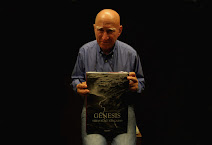
 Professor Jean-Tua, the legendary Swiss collector of classic cars and motorcycles.
Copyright Text and Photos: José Manuel Serrano Esparza